Chapter 1: The Opening Over
The Ground
The ground smelled of bruised grass and distant rain.
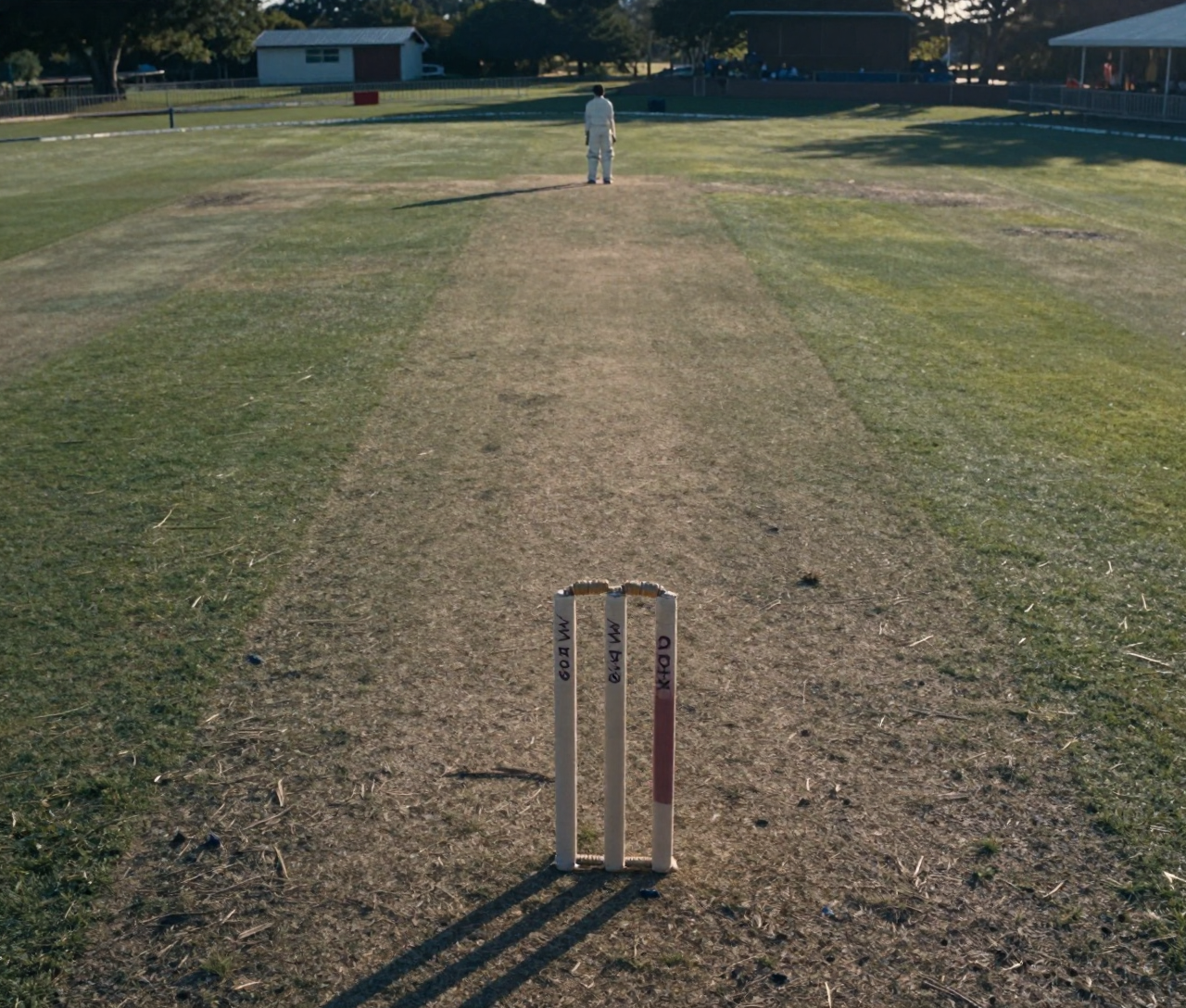
Arjun arrived early, as he always did for things that mattered — forty minutes before the other boys, carrying his kit bag over one shoulder and his father's silence like a second weight on the other. The pitch had been prepared the night before. He could see where the roller had pressed the soil smooth, a long corridor of compressed earth between the creases, already beginning to lose moisture in the morning heat. Sparrows were working the outfield for insects. A groundsman in faded blue overalls was painting the popping crease, kneeling, one hand on the ground for balance, the other moving a brush dipped in white emulsion along a chalked guide. He looked up briefly as Arjun passed. He nodded. He returned to his line.
There is a particular quiet that belongs to a cricket ground before a match.
It is not the quiet of empty places. It is the quiet of preparation — of a stage being set by hands that have set it many times before — and Arjun, walking the boundary, felt himself becoming part of it. The white sight screens were being wheeled into position. Boundary flags hung limp in the windless air. Somewhere behind the pavilion, a tap was running and someone was filling a kettle, and the small domestic sound of it carried clearly across the outfield in a way it would not, later, when the day had thickened into noise.
He had been selected to open the batting.
His captain had told him this the previous evening, over the phone, in a voice that carried the careful neutrality of a doctor delivering news that could go either way.
You're opening tomorrow. Sleep well.
Arjun had not slept well.
He had lain in the dark for several hours and rehearsed it — the walk to the crease, the guard, the first ball — until the sequence became a mantra, lost its meaning, became just motion, just breath. Around three in the morning he had given up on sleep entirely and lain instead with his eyes open, watching the ceiling fan turn at its slow ineffectual pace, and tried to think about other things. He had thought about other things for perhaps four minutes. Then he had thought about the first ball again.
By dawn he had bowled to himself, mentally, every plausible delivery in the game: the inswinger that holds its line just long enough to take the edge; the leg-cutter that pitches off and seams away; the brutal short ball at the throat. He had played each of them in the dark of his bedroom — left this one, blocked this one, opened the face to that one — and in his imagination he had survived them all. Then he had imagined himself dismissed first ball, and in the imagining he had felt his face flush hot against the pillow, and he had understood that this, too, was a kind of preparation.
The opposition were already warming up at the far end.
He watched them and felt nothing, which he had learned to recognise as a form of readiness.
The Ritual
In the changing room he laid out his kit in the order he always laid it out. Thigh pad first. Then the inner glove. Then the box. Then the front pads, which he buckled tight enough that the straps would mark his calves for hours afterwards. Then the gloves, slapped together twice — a small private percussion that was either superstition or just habit; he had stopped distinguishing.
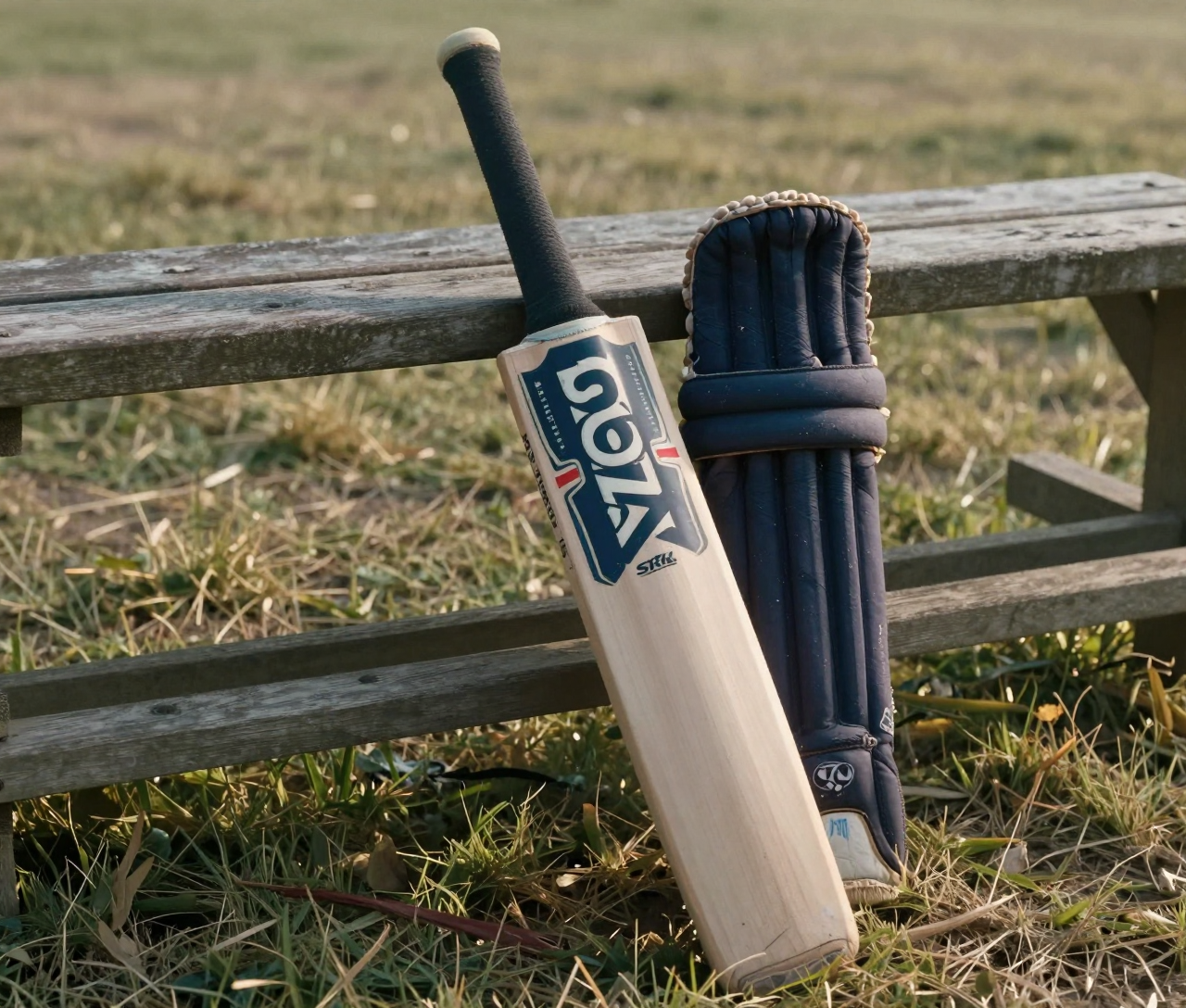
His bat was a Kashmir willow, two seasons old. He had oiled it the previous weekend. The handle was wrapped in a black grip he had replaced the day before. The blade had a constellation of pale marks across the sweet spot — the small bright bruises a bat acquires when it is used by someone who is becoming, slowly, good at the game.
He looked at himself in the long mirror by the door.
He looked, he thought, like someone who was about to open the batting. Which was, he realised, a kind of confidence: the knowledge that he had become — for this morning at least — visually indistinguishable from the boy he was being asked to be.
He picked up the bat.
He walked out.
The Witness
His father arrived twenty minutes before the start.
He did not announce himself. He simply appeared at the boundary's edge, near the sight screen, in the grey shirt he wore for occasions he didn't know how to dress for. He carried a folded newspaper under one arm — The Hindu, two days old; Arjun could tell by the colour of the masthead — and a small bottle of water. He had not brought a hat. The sun would be on him for the entire morning session.
Arjun saw him from the crease during warm-ups and felt the specific vertigo of being witnessed — that compound emotion, half pride, half dread, that has no single word in English but that every child who has ever played sport in front of a parent will know exactly.
He raised his bat in a small wave.
His father lifted one hand in return. Then lowered it. Then looked at the scoreboard, which read zero, because nothing had happened yet, because the day had not yet begun, because the world was still — for these last few minutes — a place in which Arjun had not yet faced his first ball.
The umpire called the players in.
Right, gentlemen. Coin's gone up.
Their captain had called heads. The coin had landed. They were batting.
Of course they were batting.
Of course it had been decided.
It was time.