Chapter 2: The Middle Overs
The Innings, Building
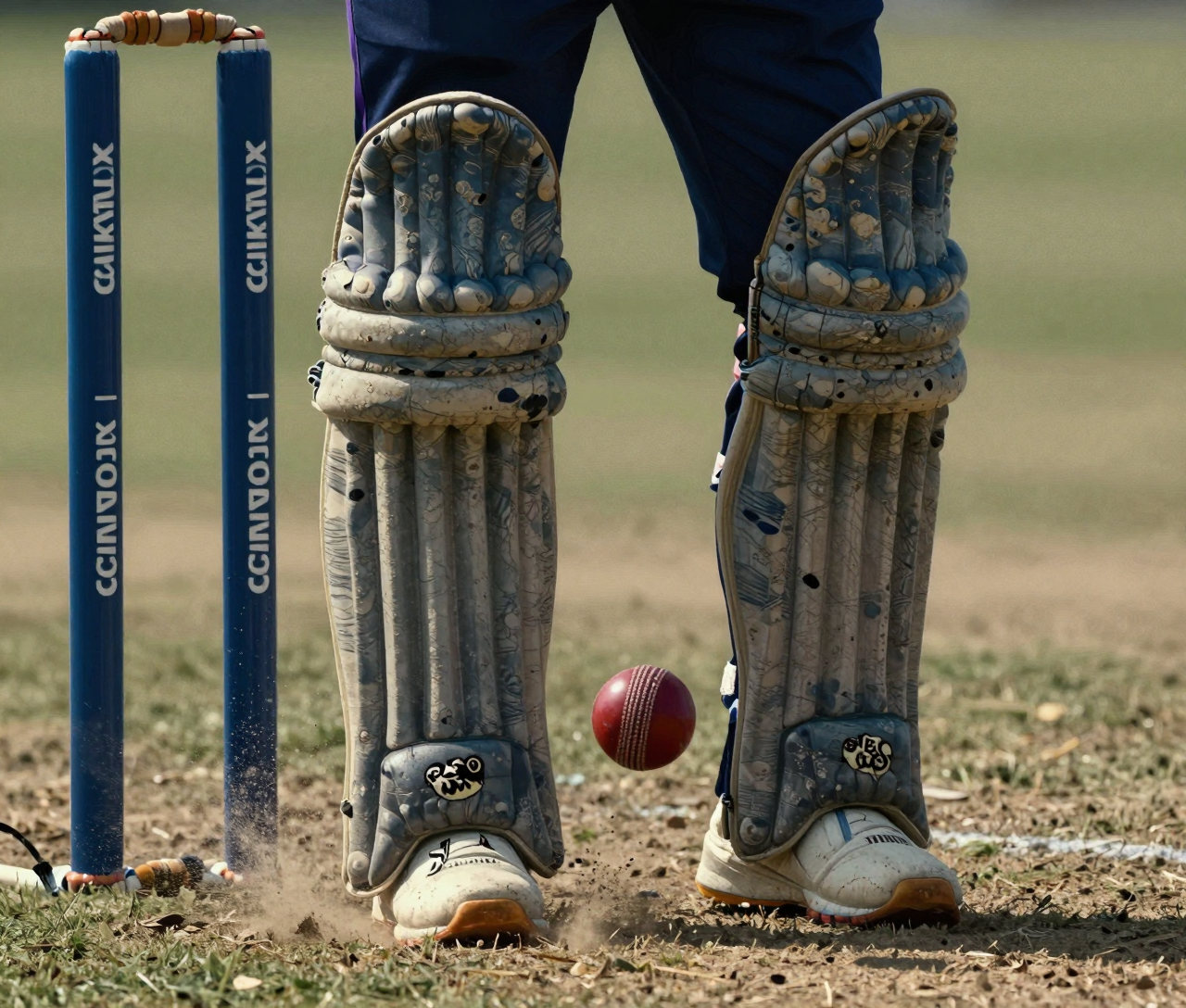
By the fifteenth over, Arjun had scored thirty-one runs.
Not elegantly. Not with the fluid authority that coaches talked about, that loose-wristed grace that made batting look like conversation — the kind of innings that, watching it, makes you forget the bowler entirely and simply admire the geometry of a body moving with intent through space. Arjun had ground for every run. He had pushed and deflected. He had run hard between the wickets, calling early and loud, refusing the ones that weren't there. Twice he had taken a single off the last ball of an over so that he, and not his partner, would face the start of the next one.
| Score after 15 overs | |
|---|---|
| Arjun | 31 not out |
| Rohan | 12 (c. mid-on, 9th over) |
| Extras | 4 |
| Total | 47 for 1 |
His partner at the other end — a boy named Rohan, who had more natural talent than sense — had been caught at mid-on in the ninth over for twelve. He had tried to clear the boundary when he should have been building. He had hit the ball cleanly, perfectly, with the middle of the bat. It had gone, on a low parabola, straight to the man stationed exactly there. Mid-on had not even moved. He had simply held his hands up at chest height, like a priest accepting an offering, and the ball had arrived in them with an audible thwack that travelled across the ground and into the silence that follows every dismissal — that brief collective intake of breath in which the watching world rearranges itself around the new arithmetic.
Arjun had watched him walk back and felt, shamefully, relieved.
The game was simpler alone.
The Rhythm
There comes, sometimes, in the middle of a long innings, a stretch of overs in which the batsman ceases to make decisions. He simply plays — and the ball arrives, and the bat moves, and the run is taken, and the next ball is bowled, and the cycle repeats itself with the unconscious efficiency of a body that has remembered something the mind never properly knew.
Arjun entered that stretch around the eleventh over.
He could feel it begin. The world quietened around him. The fielders became, briefly, less people than positions — small ciphers in a diagram he was drawing with his bat. He saw the bowler's grip as the man ran in. He saw the seam tilt. He saw, in the fraction of a second before the release, the small adjustment in the bowler's wrist that meant outswinger and not off-cutter, and his front foot was already moving before his mind had named the delivery, and the bat came down in a line that was — for these particular seven overs — exactly the right line.
Behind the bowler's arm, at the boundary's edge, his father had not moved.
The grey shirt was still there. The newspaper was still folded under the arm. He had not opened it.
The Edge
He was dismissed in the twenty-second over.
An edge. The kind that barely registers on the bat — a ghost of contact, more sound than feel — and the keeper's gloves closed around the ball with a completeness that seemed almost gentle, as if to say:
It's all right. It was always going to end this way.
The umpire's finger went up unhurriedly. There is a particular slowness to the gesture when the dismissal is obvious — when there has been no appeal needed, when the batsman has already begun the small inward collapse that is the body's first acknowledgement that the innings is over. Arjun did not look at the umpire. He did not look at the keeper. He looked, briefly, at the bowler — a tall boy he did not know, who was already half-turned away in celebration, his arms not yet raised because he was still pretending to be the kind of cricketer who did not celebrate ordinary wickets, though he would, in a moment, raise them.
He walked back.
The boundary rope seemed further than it had on the way out.
The ground that had been so full of possibility an hour ago was now just a field — a flat green expanse with people standing on it for reasons that were, suddenly, not entirely clear to him. He passed the opposition fielders without looking at them. One of them — the boy at slip, who was kind — said well played as he went by. Arjun nodded. He could not, for some reason, find his voice.
He reached the pavilion.
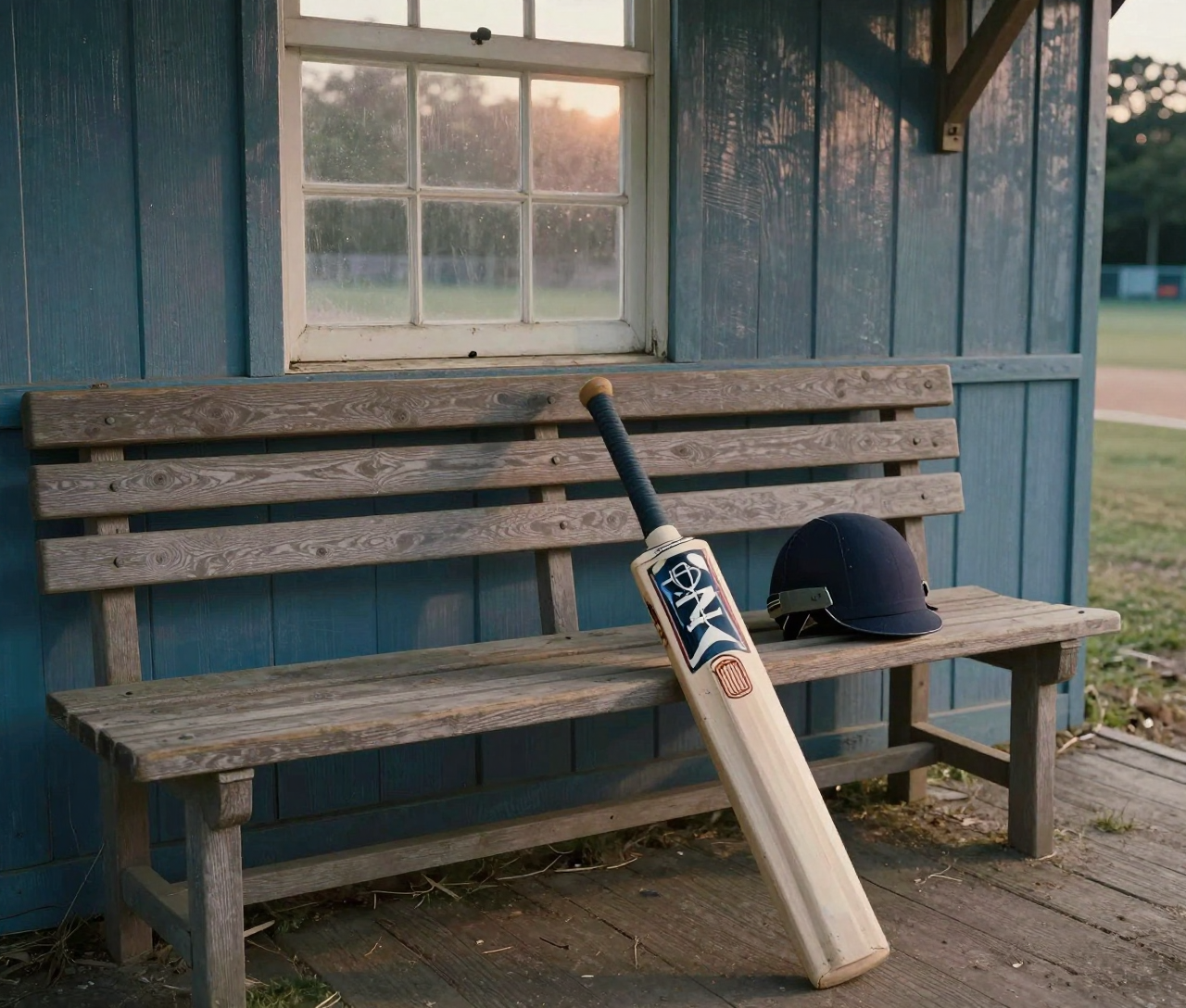
He sat down on the wooden bench just inside the door, in the cool shadow of the corrugated iron roof, and unbuckled his pads with hands that he was surprised, distantly, to find were steady.
The Bench
His father was still at the sight screen.
He did not look up from the ground, but he knew the grey shirt was there, in his peripheral vision, a smudge of witness. And then, after a moment that lasted the correct length of time — neither too soon, which would have been pity, nor too late, which would have been distance — he felt rather than saw his father move. He saw him walk, in his unhurried way, around the boundary. He saw him climb the three concrete steps to the pavilion. He saw him enter the cool dim interior and look around once, briefly, before crossing to the bench where Arjun sat.
He did not sit next to him.
He sat on the bench nearby — close enough that they were clearly together, far enough that neither of them would have to speak.
Neither of them spoke.
The game continued, out beyond the open door. Someone else walked to the crease — the number three, a left-hander, who would survive eight balls before being bowled by one that kept low. Arjun heard, but did not watch, the appeal and the answering silence.
The afternoon light fell across the oval in long, golden shapes.
Arjun sat with his dismissal and his father's proximity, and found that the two things together were almost bearable — were, in fact, almost enough.
Almost, he thought. And then, perhaps: enough.